
Billions are flowing into U.S. semiconductor manufacturing, but one fact keeps getting overlooked: you can’t beat global competition if only the largest incumbents can get wafers made. Innovation rarely starts at volume. It starts at the edge—inside startups, national labs, and defense programs that need a handful of wafers to prove a concept, secure a supply chain, or validate a mission-critical part. Today, those teams hit a wall: domestic, flexible-volume manufacturing is scarce.
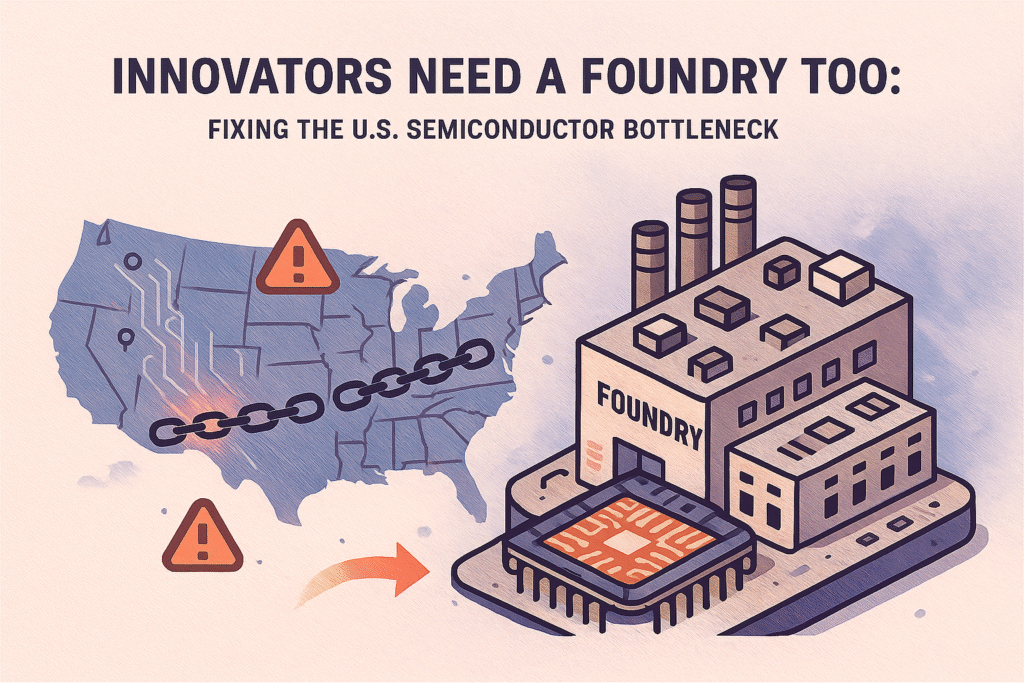
Built for throughput, not for first builds
Modern foundries are optimized for massive, predictable runs. They expect big commitments, pricey mask sets, and long lead times. That model is perfect for smartphones and other high-volume products—but it locks out early-stage designs and low-rate defense needs. The problem isn’t only capacity; it’s the institutional design of the ecosystem.
The mask problem—and a path around it
Advanced photomasks can cost a fortune and take 6–12 months to produce, putting low-volume projects out of contention. Maskless lithography, particularly multi-beam electron-beam direct write, changes the equation: no masks, faster iteration, and viable throughput for limited production and rapid prototyping. Without mask lock-in, teams can:
- tweak designs between lots,
- produce highly customized devices, and
- embed die-level security features that matter to both commercial and defense users.
Don’t forget obsolescence
Many defense systems still depend on parts from mature nodes (≥180 nm) that mainstream fabs have moved away from. In some cases, tooling is gone and design assets are missing, forcing painstaking reverse engineering to recover intent, not just geometry. That requires time, talent, and dedicated infrastructure—all of which are fading as the market chases only the newest nodes.
What’s missing from current policy
The CHIPS Act jump-started a domestic resurgence, but a critical piece is still underbuilt: flexible-volume, U.S.-based manufacturing pathways that let novel designs—and legacy replacements—reach production without enterprise-scale overhead.
The ask
- Stand up maskless, multi-beam e-beam capacity for R&D through low-rate production.
- Fund shared tools and process pipelines that bridge lab prototypes to packaged, tested parts.
- Preserve and modernize mature-node capability for sustainment and trusted defense supply.
The next breakthrough isn’t waiting on a bigger budget—it’s waiting for a doorway into domestic silicon.